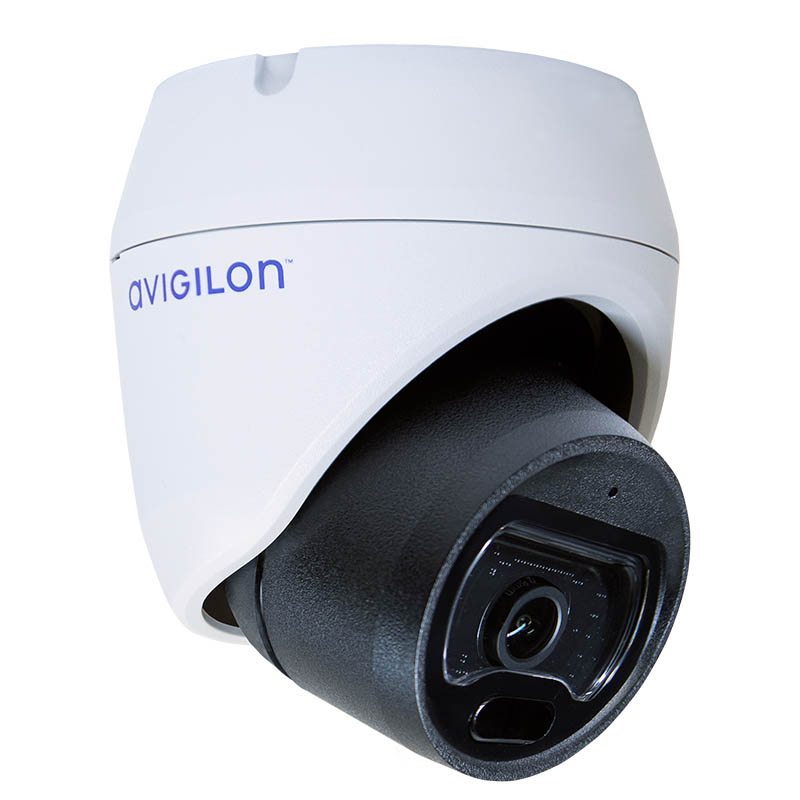
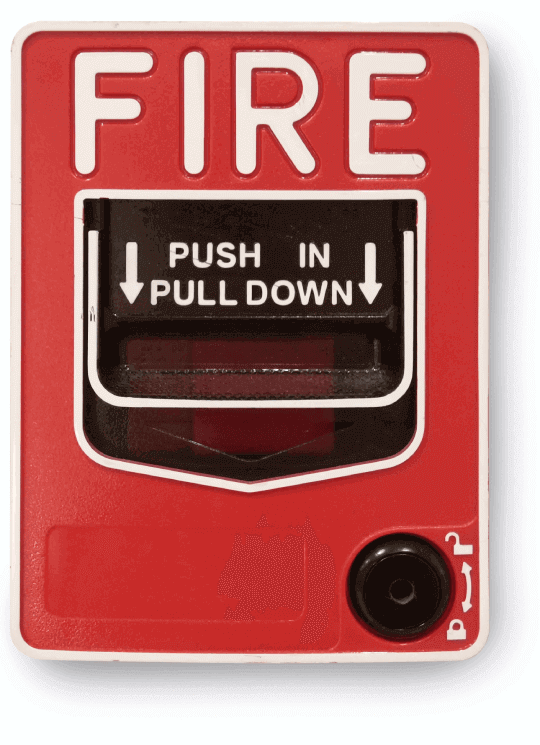
When heat sensors or smoke alarms are triggered in an alarm system that isn't integrated, a signal is sent to its fire alarm panel, and an alarm sounds.
An integrated fire alarm system will not only sound an alarm in the event of a fire, but it will also relay emergency information to connected security systems and building automations so that they can operate with fire safety as their priority. In other words, fire alarm system integrations help to contain fires and save lives by ensuring a coordinated response.
Fire alarm systems integrated with access control and AI-supported video surveillance systems can automatically lock doors, shut off elevators, and provide detailed information to first responders about a fire's location and the presence of people in a building.
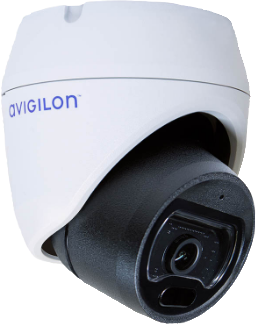
Even without AI features, security cameras can monitor the progress of a fire and aid in the evacuation of a building.
In the event of a fire, integrated alarm systems can automatically provide mass notification to security personnel, the fire department, and building occupants. These notifications help to speed up emergency response times, minimize damage, and save lives.
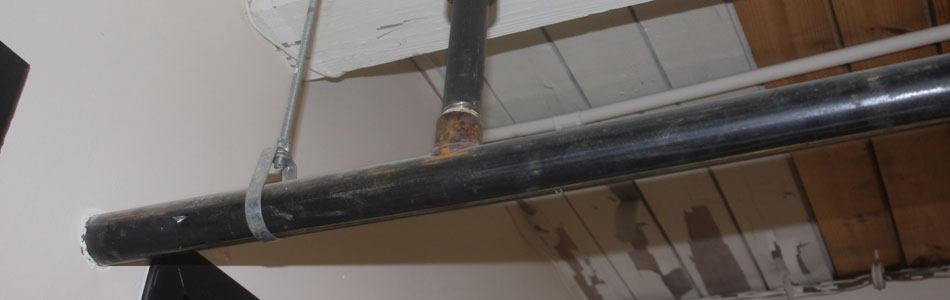
Fire alarm integrations enable automated actions for fire suppression. For example, sprinklers and gas suppression systems can automatically activate when a fire is detected, and they may even put out a fire before it spreads.
Fires can also be contained by integrating fire alarms with heating, ventilation, and air-conditioning (HVAC) systems. For example, airflow to specific areas of a building can be sealed to contain the spread of smoke and fire.
The integration of fire alarm systems with other systems allows for monitoring, alarm management, and notification delivery from anywhere with an Internet connection.
An added bonus: integrated alarm systems are likely to relay emergency information to professional monitoring services that specialize in responding to fires.
In addition to saving lives and protecting property, integrating smart-building automations and security systems allows for centralized management on one interface. Each integrated system becomes more efficient and less confusing to operate.
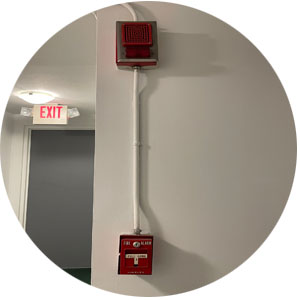
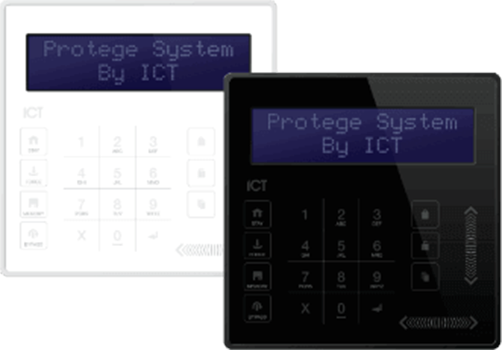
An integrated fire alarm system combines many security and building automation components—such as motion detectors, cameras, door controllers, and air vents—through a central control panel.
This central control enables practical fire responses from all integrated systems.
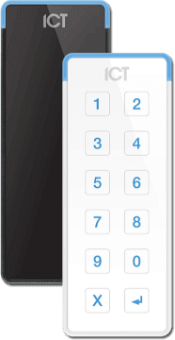
In most cases, an alarm-integrated access control system will automatically unlock all exits to support quick and safe evacuations while locking other doors to contain fires. And elevators with alarm-integrated access control can prevent people from riding to higher floors in a building or using elevators at all.
Nothing happens to doors when a fire alarm is active unless they are part of an integrated fire-safety system. When an integrated fire alarm is activated, door access controllers can automatically lock or unlock certain doors based on the specific configuration of the building and the emergency evacuation plan.
Fire alarm systems can be integrated with access control, HVAC systems, surveillance cameras (CCTV), smart building automation systems, public address speaker systems, and fire-suppression systems (like sprinklers).
The four main types of fire alarm systems are conventional alarm systems, addressable alarm systems, analog addressable alarm systems, and wireless alarm systems.
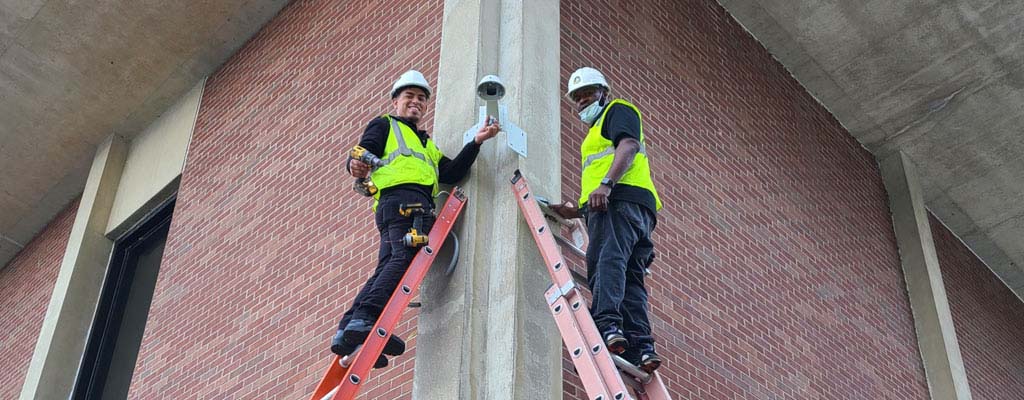
From alarms and access control to cameras and cabling, our team here at Mammoth Security takes pride in what we do and would love to share our expertise and workmanship with you. We want you to know that you can trust us to customize fire systems to meet the specific layouts and functions of your properties while meeting local fire-safety codes and regulations.
If you're ready for the next step toward securing your property, fill out the simple form below to set up a free, zero-obligation site consultation. You’ll meet a friendly member of our team as we survey your property, discuss your security concerns, spot points where your security can be improved, and begin to develop a security system that’s expertly tailored to your site’s unique layout and needs.

Wireless
IP Cameras
Wireless cameras are not reliable enough for commercial use yet. Instead, we use purpose-built antennae to connect hardwired cameras on light poles and buildings.

Phone App
For Camera Systems
Watch live or previously recorded footage on any mobile device. Save it to your phone and e-mail it just like any other video or image.

Increased Resolution
Of 4096×2160
4k or 8MP cameras represent the best value at the moment. Depending on your situation, a 30+ megapixel camera can be installed allowing you to read a seat number from the opposite end of a football field.

Employ The Same Technology As These Companies: