THOUGHT CENTER > Blog > Security Systems
March 24, 2022
When it comes to ethernet cable management, zip ties have always been the choice of many professionals. Zip ties are durable, affordable, and can be easily stored right away. Over the past years, however, Velcro has become a popular alternative for cat 5 wire cable management. Some people still prefer the simplicity of zip ties, but others have chosen the natural flexibility of Velcro straps.
Now, what is really the best choice – zip ties or Velcro? How can these two popular ethernet cable straps affect the performance and quality of installed cables?
In this article, you will learn about the difference between zip ties and Velcro. Additionally, we’ve also compared the performance of ethernet cables with zip ties and cables with Velcro straps.
These are the important factors that we’ve included in our comprehensive cable modem ethernet port test:
We highly advise homeowners or business owners to take ethernet cable management seriously. If you want to have a stable security network setup for your home, you must start by understanding the separate qualities of Velcro straps and zip ties.
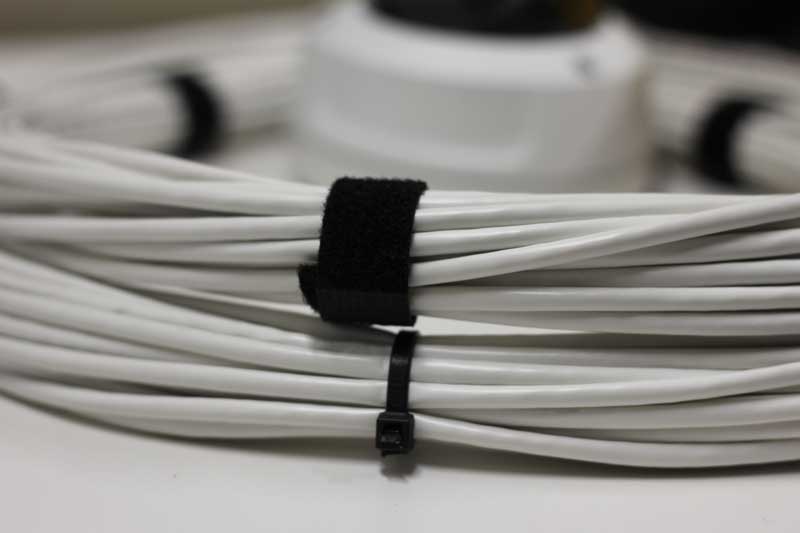
Right from the start, a security professional or a technician must use ethernet cables that have passed certification tests. A high-quality ethernet cable won’t be affected too much by zip ties or Velcro straps. However, based on our specific tests, we’ve observed that zip ties have immediate effects on cables installed in rigid locations.
Zip ties are more prone to over-tightening because of how they are designed. Basically, zip ties are built for maximum security and ISP cable modem stability. But if zip ties are constantly over-tightened, they wear out easily and must be replaced as soon as possible.
Over-tightened zip ties can also lead to long-term cable path degradation. The zip tie can compress the outer layer of the cables connected and eventually disrupt the flow of private network data. Solving this problem is rather easy. You just have to loosen the zip tie or reposition the ethernet cables in a stable location. In most cases, repositioning the cable and loosening zip ties can save material expenses.
Velcro, on the other hand, offers greater flexibility than zip ties. A typical Velcro strap can be adjusted accordingly. If the strap seems too tight, you can simply adjust it. Additionally, adjusting a Velcro scrap takes only a few seconds compared to a zip tie. Most Velcro straps are also reusable even after a year or two has already passed. Due to Velcro straps' reusability, you can save money on future cable modem setup projects and adjustments.
Cable folding is one of the common mistakes of security system beginners and homeowners. If a cable is folded, its capability to transmit data and information to network interfaces might be compromised. In a security network, the problem translates to poor reception, delayed responses, or inconsistent network speed.
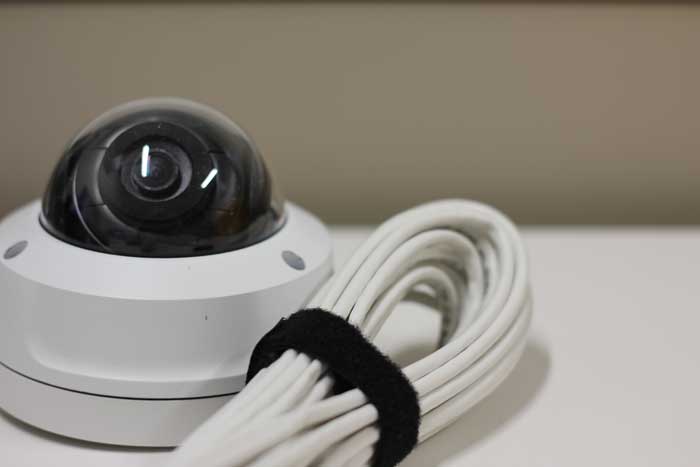
Folded cables with zip ties have faster degradation compared to Velcro-strapped cables. Due to this limitation, all the cables with zip ties typically don’t pass certification. Velcro-strapped cables have diminished quality over time, but they can be adjusted to improve Internet access quality and Gigabit speeds.
Flattening a cable modem service loop is one of the fastest ways to induce cable degradation. If a service loop is flattened, the cable’s outer jacket will wear out quickly. Over time, the cable’s inner wiring will get damaged.
Damaged service loops can affect the general quality of home network devices and DVD remote receivers. Also, damaged ethernet cables that supply Internet access can compromise the entire system within a few years.
Through Mammoth Security’s service loop tests, we have observed that zip ties caused more internal damage than Velcro straps. An over-tightened zip tie stresses the cable’s outer jacket and affects the internal wiring. Combined with the ill-advised technique of cable-flattening, the zip tie can worsen the cable damage.
To minimize the damage and structural stress of a service loop, here are some quick solutions:
Even if you’re using a low-quality zip tie, it can still crush a cable’s outer jacket. The zip tie can also crush twisted conductors, especially the ones made of copper. Since copper is a crucial component of a Cat 6 cable, any level of damage can be detrimental to the entire home network.
One factor that can affect the overall cable quality is twisted copper wire deformation. Severely flattened service loops are usually way off the limit of Cat6 cables. This deformed cable cannot repel crosstalk and system noise between other groups of twisted pairs, leading to noticeable headroom performance reduction. You will notice an instance of reduced gigabit speeds in huge networks with lots of deformed cat6 cables. Oftentimes, repositioning the cat6 cables will yield better gigabit speeds almost immediately.
Having optimal headroom is important in cable management. If the headroom is properly optimized, the cables can deliver data at staggering speeds. It’s possible to achieve proper headroom reduction by using Velcro straps efficiently. Also, an efficient headroom setup can improve the quality of a wireless access point.
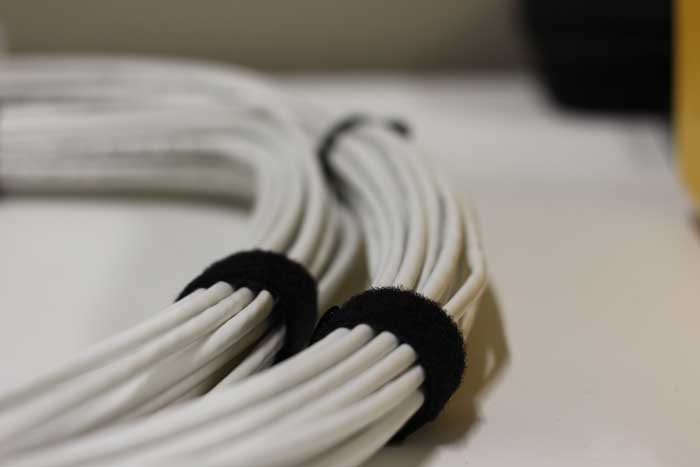
A home network system with Velcro straps is more likely to pass certification. Velcro straps are also easy to remove if ever you need to overhaul the entire cable network.
In order to determine the impact of Velcro straps and loosely fitted zip ties, we’ve run a standard test on a bundle of cat6 cables. Up to 50 Velcro straps were fitted onto a bundle of 6 cables and we took the proper measurements. Afterwards, we added 24 cables to the entire bundle and noticed no change regarding cable performance impact. The IP security cameras connected to the cables suffered no delays in terms of data transmission.
During the second phase of the test, we removed the Velcro straps and replaced them with durable, loose-fitting zip ties. Even though the zip ties felt tighter, we discovered that there’s also no direct impact in terms of performance.
Therefore, it’s very important for a cabling professional to prioritize loose-fitting zip ties in small areas. On the other hand, using a Velcro strap is another key solution in setting up a convenient Internet connection for a business or an establishment.
To continue measuring the impact of zip ties, we ran another test involving coax cables and other materials like building steel, conduits, struts, uni-struts, and columns. After the test, we’ve noticed a small reduction in performance. The same reduction rate also applies to Velcro straps with minor variations depending on initial headroom adjustments and positioning. We noticed that the initial 9-dB rate went down to almost 5.9 dB after the test. In a gigabit ethernet connection, such a drop in data transmission is noticeable in less than 20 minutes.
The twist rate is a common feature designed to ensure optimal gigabit ethernet cable performance. This feature works by preventing the degradation of signal strength and improving compatibility among various cable types.
In the image below, you can see a Cat 6 cable with different twist rates for each pair. Every pair has different properties and functions related to telecommunications, electrical installations, and large-scale security networks.
A damaged cable won’t affect the performance of video surveillance devices immediately. To measure the effects of a damaged cable, we’ve run a quick, standard test. We simply connected the cable to a security camera and observed any rate of performance reduction. The reduction is minimal, but we are certain that this will get worse over time.
If there are multiple damaged cables in a video surveillance network, the troubleshooting process will become more difficult. Location can also exacerbate the damage, thus requiring higher costs and greater repair efforts. Network equipment performance might also suffer permanently if the damaged cables remain unrepaired for a long time.
Mammoth Security has coordinated with some cable manufacturers to gather their insights about proper cable installation methods, certification, and overall service support.
The Building Industry Consulting Services International (BICSI) believes that effective fitting techniques can close the gap between zip ties and Velcro straps. Through hooking and looping straps, excellent cable security can be achieved without signal interference or performance issues.
BICSI has also emphasized the importance of cable strap width. A technician can adjust the cable strap width to reduce cable pressure and prevent damage. Nowadays, it’s easy to order zip ties with large cable straps that can be easily adjusted.
Check the image below to see the difference between a wide zip tie and a narrow zip tie fitted into a cable.
For every cabling project related to security, Mammoth Security recommends the proper use of Velcro straps. Zip ties can affect the overall performance of cables, and they can even cause early degradation. More importantly, technicians and security professionals shouldn’t use cables that didn’t pass the proper certification standards. Otherwise, a security network might fail within a short period of time, leading to additional repair and replacement costs.
Contact Mammoth Security today if you need home security systems in West Hartford!
NOT COMPLETELY SURE?
860-748-4292
HI! MY NAME IS
Matt
I’m not just another sales guy. I’m a security expert ready to discuss your security strategy one-on-one.
Let’s discuss your security strategy and get you a tailored solution that will perfectly fit your security expectations.

Get your FREE copy of ‘Top 10 Questions to Ask Before Purchasing A Camera System’